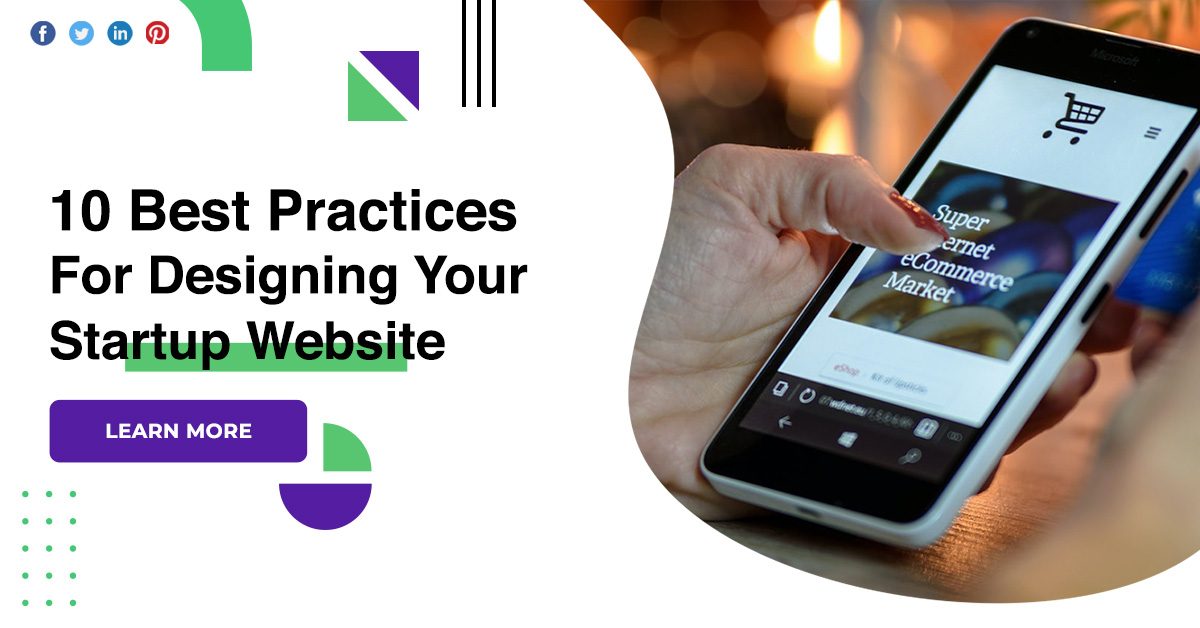
10 Best Practices For Designing Your Startup Website
Startups solve consumer problems through innovative, often tech-driven solutions. As a result, they rely heavily on strong web design and digital branding to launch and grow their businesses. A well-designed startup website builds trust, attracts users, and drives conversions from day one.
Designing your startup website
Keep branding consistent
Web design that lacks consistent branding is stressful and confusing. There are quite a few brand websites that are kind of all over the place. A best practice when designing B2C and B2B websites is to keep branding consistent across the site.
Create strong calls to action
The two main goals of a website are to attract a large target market and to tell the customer what you have to offer. The ultimate goal should always be to entice the visitor to complete an action, whether it’s signing up for a newsletter, downloading a case study, or scheduling a consultation.
Fast loading time
A single second of faster page load speed can cause sales to drop by up to the average size of websites grew. Websites are getting bigger, and today’s research suggests that the sweet spot number for load times may be a little closer to two seconds than the current three seconds.
SEO
SEO is one of our simple and effective web design best practice suggestions. It is used to increase the number of visitors to your website by getting a high ranking on the search engine results page. It does this by using a single phrase, known as a keyword, that is used in compelling and readable content on your website. It is essential for search engines to include all important on-page SEO tags and elements, including the schema and XML sitemap.

Mobile
You can create great websites that look good when viewed on a desktop or laptop, but when viewed on a mobile phone or tablet. It becomes very confusing, disorganized and difficult to navigate. On average, 8 out of 10 consumers stop using a website if its content does not display properly on their device.
Easy navigation
Users expect to find information quickly. If they struggle, they leave. Simple menus, clear page hierarchy, and logical layouts help users move effortlessly through your site. Easy navigation improves user experience and supports better engagement.
Email marketing
Although an older form of staying connected, email marketing still plays a major role in keeping customers and potential customers in the loop of your services and content. Past experience has shown us that 77% of executives prefer receiving marketing communications via email over other forms of marketing.

Social media
Social media amplifies your brand message and expands reach. Therefore, startups should link their social profiles wherever possible. Include social links on your website, emails, blog posts, and other digital assets to encourage engagement and sharing.

Quality photos
People can recall up to 65% of information that is visually displayed for a 72-hour period versus only 10% of the information they hear in the same time period. With 37% of the population being visual learners, offering high-quality photo and logos will help your audience more easily gauge your brand and content.
Color scheme
Your website should embody your brand personality and so should your color scheme. If the background and text colors do not provide sufficient contrast. People will have difficulty reading your content and will not be happy if your website is not visually appealing.

Conclusion
Designing a startup website requires continuous effort. You cannot build it once and forget it. By consistently optimizing design, performance, and content, startups can create websites that attract users, support growth, and deliver real business results.








 Minnesota (HQ)
 Canada
 Australia
 India